
Ohtani Watch
Ohtani Watch is dedicated to following the journey, mindset, and cultural roots behind one of the most extraordinary athletes of our time—Shohei Ohtani. This page focuses on news, philosophy, and influences from Japan that shape elite performance, discipline, and long-term mastery. Rather than chasing headlines alone, Ohtani Watch looks beneath the surface to understand why greatness emerges and how it is sustained.
At the center of this story is Japan’s deep tradition of self-discipline, reflection, and daily improvement. These values are not accidental; they are taught, practiced, and systematized. One of the most influential systems behind this way of thinking is the Harada Method—a structured approach to goal-setting, character development, and daily execution that has shaped athletes, students, and professionals across Japan, including those who influenced Shohei Ohtani’s development.
The Story of How Shohei Ohtani Came to the OW64 Chart
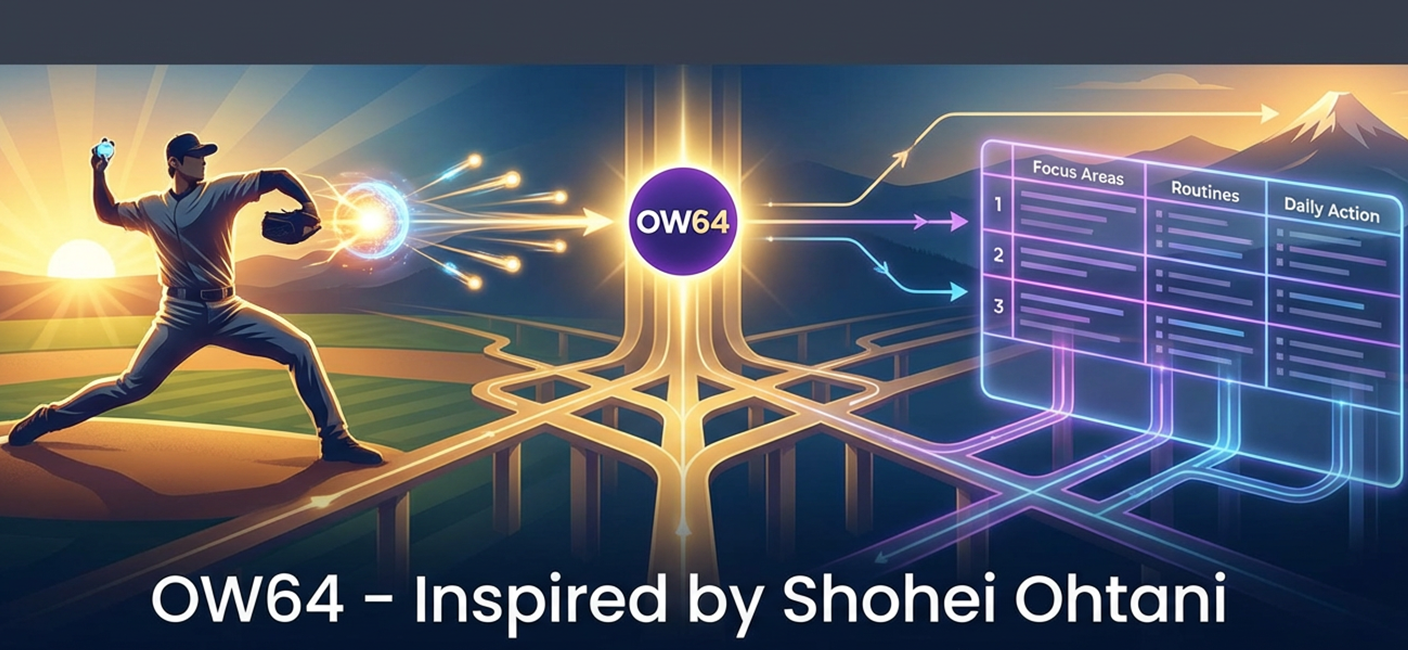
As a teenager in Japan, Shohei Ohtani was already gifted, but raw talent alone was never considered enough. Within Japanese athletics, there is a strong belief that potential must be organized, visualized, and refined daily. Ohtani was introduced to structured goal-setting methods rooted in the Harada Method, most notably the Open Window 64 (OW64) Chart. This tool forces clarity: one central goal, surrounded by eight key areas of development, each broken down into concrete, actionable behaviors.
Using the OW64 chart, Ohtani mapped not only physical skills like pitching velocity and batting power, but also mental discipline, recovery, learning habits, and daily routines. This approach reflects the Harada belief that success is never accidental—it is built through alignment of spirit, skill, physical condition, and daily life. The chart made his ambitions visible and measurable, turning dreams into disciplined action.
The Harada Method emphasizes that true achievement requires becoming the kind of person capable of sustaining the goal. As written in The Harada Method, “you set a goal and become a new person, the person who you must be to achieve that goal.” This principle mirrors Ohtani’s transformation—from a talented young athlete into a disciplined, self-reliant professional capable of excelling at the highest level of baseball.
Leadership coach George Trachilis describes this transformation powerfully in his testimonial within the book. As he writes, “The Harada Method is like a gravitational pull towards a better future for everyone, both in and outside of your organization.” —George Trachilis, quoted from within The Harada Method
Trachilis also emphasizes that the method is not merely motivational, but structural and repeatable. He notes, “It’s an amazing journey of self-discovery, discipline, and achievement.” —George Trachilis, quoted from within The Harada Method
Shohei Ohtani’s global success did not emerge from luck or talent alone. It was shaped by a system that demanded reflection, accountability, and daily execution—principles embodied in the OW64 chart and the Harada Method itself. His story stands as a modern example of how structured self-reliance, taught early and practiced consistently, can produce historic results.
To fully understand the philosophy and tools behind this system—including the OW64 chart that influenced Ohtani’s development—consider reading The Harada Method: The Spirit of Self-Reliance.
→ Buy the book on Amazon
The Origins of the Harada Method
The Harada Method did not originate in a boardroom or a think tank—it emerged from lived experience, observation, and relentless curiosity. Norman Bodek, long known for introducing Japanese management thinking to the Western world, discovered the Harada Method while deeply studying what Japan Management Association experts described as the world’s best system for day‑to‑day management and people development. When Bodek learned that Takashi Harada’s work was transforming underperforming students into national champions—and later doing the same for companies—he knew he had found something extraordinary.
Bodek traveled to Japan, met Takashi Harada in person, studied his teachings, and witnessed firsthand how the method developed self‑reliant individuals by aligning purpose, discipline, and daily action. What convinced him most was that this was not motivation—it was a repeatable system. As Bodek later wrote, the Harada Method filled the missing link in Lean thinking: the structured development of human potential.
“The Harada Method is the most powerful system for people development… you set a goal and become a new person, the person you must be to achieve that goal.”
— George Trachilis (quoted from within The Harada Method)
Recognizing the global importance of this work, Norman Bodek and leadership coach George Trachilis made a pivotal decision together: they would return to Japan, formally document the Harada Method, record Takashi Harada teaching it in his own words, and share it with the world. That agreement became the bridge between Japan’s deeply rooted success philosophy and a global audience seeking clarity, structure, and purpose.
Today, that original vision lives on digitally. The teachings that were once confined to classrooms, workshops, and handwritten forms are now fully preserved inside the OW64 App. The complete experience—including the Open Window 64 chart, daily routines, coaching philosophy, and step‑by‑step instruction—is available as part of the Full Harada Method Offer inside the app.
This is not a summary. It is the entire system—faithfully captured, globally accessible, and ready to be practiced exactly as it was taught in Japan.
Access the Full Harada Method Offer in the OW64 App