
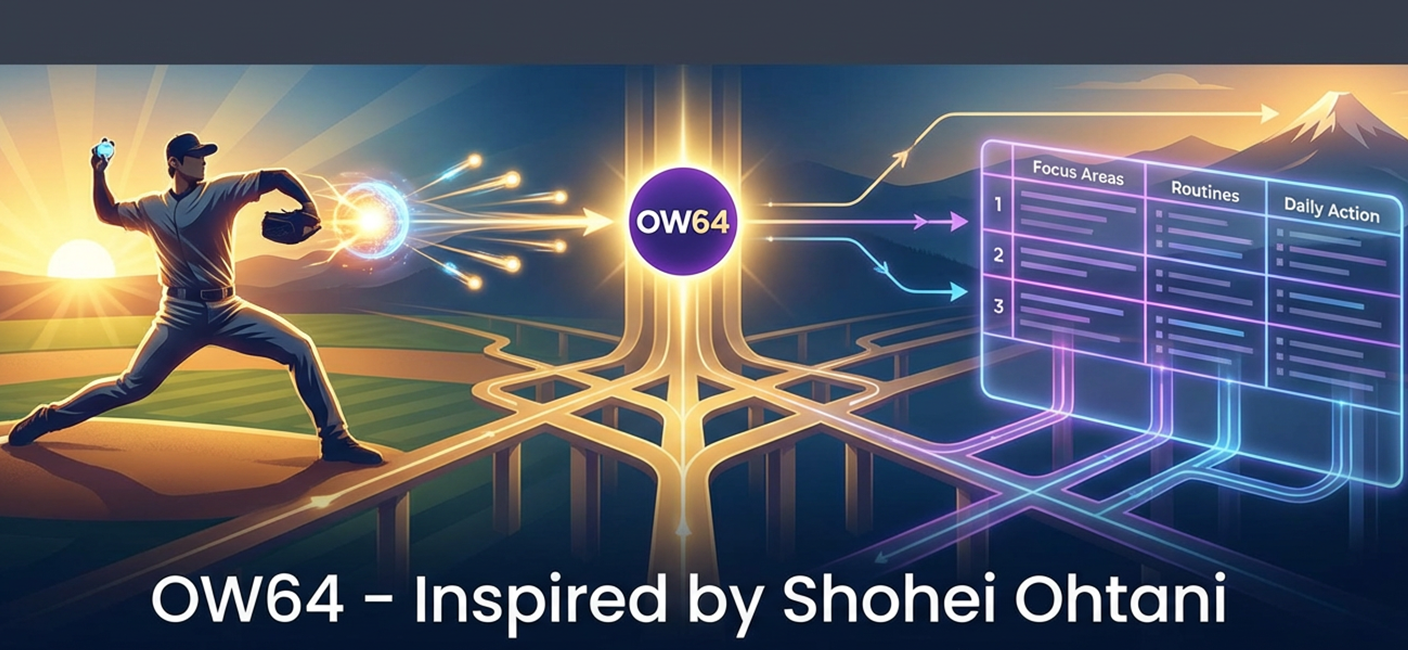
Shohei Ohtani and Other Amazing Harada Students (Part 2)
Shohei Ohtani and Other Amazing Harada Students (Part 2)
0:02-0:05
Narrator: "Everything Japan can do to win the World Cup."
0:09-0:17
Narrator: "The mental training techniques of the Harada Method, which Uniqlo founder
Tadashi Yanai admires and Shohei Ohtani practices."
0:21-0:30
Narrator: "Setting goals and objectives, concrete actions for realization, writing positive words
daily... Last time, we explored the essence of self-management that promotes independence and
growth by writing these things down."
0:30-0:39
Narrator: "In the second half, we'll learn how to build a strong team using the Harada Method
from Takashi Harada, the creator of the method."
0:39-0:47
Narrator: "Praising and brainstorming, while limiting negative feedback to specific parts and
actions, and not denying the person's character."
0:47-1:00
Harada: "Praising because you won, and scolding because you lost... That's a little different.
You lost 3-2, but you scored 2 points."
1:00-1:05
Harada: "You have to praise that too. Why are Japanese people so bad at praising?"
1:05-1:11
Harada: "Because they value humility as a virtue."
1:11-1:11
Harada: "Yes."
1:11-1:11
Harada: "The sports world is really bad at it."
1:11-1:26
Narrator: "Let's move on to the theme of the second half. Here it is: The Harada Method for
strengthening teams. The Harada Method is effective not only for strengthening individuals but
also for strengthening organizations."
1:26-1:29
[Applause]
1:29-1:39
[Music]
1:39-1:44
Harada: "As you can see, there's a clear difference between good teams and bad teams."
1:44-1:44
Katsumura: "Yes."
1:44-2:01
Harada: "And what does that come from? It comes from the way of thinking of the players and
coaches. If you loosen that up with mental training, it will change..."
2:01-2:02
Katsumura: "Yes. Yes."
2:02-2:12
Harada: "That makes the children like this and overwhelmingly makes the team sink. But if you
praise, encourage, and suggest, it will change completely. That's what it is."
2:12-2:20
Narrator: "So, it's about changing the atmosphere of the team. That's mental training."
2:20-2:30
Narrator: "Doan Ritsu of the Japanese national team has shown the following idea about the
importance of mental strength: Shin (mind), Gi (skill), Tai (body) - 9:0.5:0.5."
2:30-2:41
Narrator: "He was able to score two goals in the important moments of the Qatar World Cup
because he continued to train his brain even during his off time."
2:41-2:47
Katsumura: "That's amazing."
2:47-2:48
Katsumura: "Yes."
2:48-2:55
Harada: "Normally, you practice skills and formations, and you do strength training. But he has
this as well, so he has 10 in his hand."
2:55-3:01
Harada: "That means that the remaining 9 is full of potential for growth."
3:01-3:02
Katsumura: "Yes."
3:02-3:04
Harada: "Mr. Doan also..."
3:04-3:09
Harada: "...I think that ratio came about as he gained experience."
3:09-3:10
Katsumura: "Yes. Yes. Yes."
3:10-3:20
Kakitani: "I relied too much on my skill, so I think it was about 1:9:1 as a soccer player."
3:20-3:39
Kakitani: "After hearing various stories and based on my own experience, I realized that when I
failed, it wasn't because my skills weren't good enough, but because my mind wasn't ready and I
wasn't prepared well enough. I realized that more when I finished my career."
3:39-3:49
Kakitani: "Instead of thinking like that, I wanted to look at myself like Mr. An and realize that
those things are important and play."
3:49-3:51
Harada: "That's wonderful. And one more thing: life."
3:51-3:52
Katsumura: "Life."
3:52-4:05
Harada: "In the Shin-Gi-Tai-Seikatsu (mind-skill-body-life), Mr. Doan says that if you focus on
your feelings, exercise, meals, life, and improve your sleep and human relationships, your soccer
performance will improve even more."
4:05-4:09
[Music]
4:09-4:14
Narrator: "By the way, Mr. Katsumura, what do you think about Shin-Gi-Tai-Seikatsu?"
4:14-4:18
Katsumura: "As I've gotten older, Shin has become a big part of it."
4:18-4:21
Narrator: "Yes, it has. What about life?"
4:21-4:27
Katsumura: "I have a family, so I put more and more energy into that side."
4:27-4:27
Harada: "Yes."
4:27-4:31
Katsumura: "I used to only think about myself."
4:31-4:31
Narrator: "What about you?"
4:31-4:39
Narrator: "For example, as an announcer, I thought that the skill aspect was more important
because I was required to have skills."
4:39-4:50
Narrator: "But when I get nervous, I tend to speak too fast or stumble, so I realized that I need
to get my mind in order first, and then the skill is what's required. I understand that now."
4:50-4:51
Harada: "Maybe you thought that the mind was..."
4:51-4:54
Harada: "...about spirit and willpower."
4:54-4:55
Katsumura: "Yes."
4:55-4:56
Harada: "That's not it."
4:56-5:07
Harada: "The mind has 12 elements, such as perseverance, fighting spirit, predictive ability,
judgment, decisiveness, and cooperation. There are 12 of these elements."
5:07-5:08
Katsumura: "There are that many?"
5:08-5:10
Harada: "Yes. There are. Mental trainers can now quantify clients and teams according to these
12 scales."
5:10-5:17
Harada: "Isn't that interesting?"
5:17-5:21
Katsumura: "Yes."
5:21-5:22
[Music]
5:22-5:32
Narrator: "The Harada Method strengthens teams by emphasizing mental strength. From here,
let's look at five specific training methods that are useful for companies and families."
5:32-5:37
Narrator: "First, setting common goals and objectives."
5:37-5:42
[Music]
5:42-6:07
Harada: "If the players are all over the place, the energy won't increase. So, it's very important
to create goals and objectives as a team and then share them with everyone..."
6:07-6:16
Harada: "We have to do this, but many Japanese companies have joined us, but unfortunately,
most of them don't do this properly."
6:16-6:16
Katsumura: "Yes."
6:16-6:25
Narrator: "Mr. Kakitani, do you have any examples of things that went well or were realized
because you set common goals and objectives during your active career?"
6:25-6:42
Kakitani: "I think this is especially true for the recent one..."
6:42-6:43
Narrator: "I see."
6:43-7:01
Kakitani: "Of course, not only the 18 people but also the members who are not involved in the
game have to play the role of the opposing team..."
7:01-7:01
Harada: "Yes."
7:01-7:06
Harada: "It's not about whether you play or not, but about becoming one."
7:06-7:09
Kakitani: "It's easy to say, but I think it's difficult."
7:09-7:22
Kakitani: "Especially for young people..."
7:22-7:24
Katsumura: "Yes."
7:24-7:37
Narrator: "Important goals and objectives for the team to face the same direction..."
7:37-7:44
Harada: "The image in the human brain is made up of three elements: words, images, and
emotions."
7:44-7:53
Harada: "The words are 'We will win and give courage and energy to the disaster victims and
the people of Japan.'..."
7:53-7:55
Harada: "And one more thing is visualization."
7:55-8:13
Harada: "Visualization is about creating an image..."
8:13-8:26
Harada: "Everyone watches the video of their best plays 10 minutes before the game..."
8:26-8:38
Narrator: "For example, motivation videos that raise the team's spirit..."
8:38-8:40
[Music]
8:40-8:54
Kakitani: "Rather than every game, we save it for important games..."
8:54-9:03
Harada: "We've been doing that."
9:03-9:07
Harada: "It's called the high point, the point of the best state."
9:07-9:16
Harada: "The low point is when you draw the last game..."
9:16-9:26
Harada: "It's important to recreate yourself with the image of your best state..."
9:26-9:30
Narrator: "Business people can do it too, right? The best present?"
9:30-9:34
Harada: "It doesn't have to be an image..."
9:34-9:36
Harada: "Snapshots are okay. Still images are okay."
9:36-9:41
Harada: "You can take a picture of your pay stub..."
9:41-9:42
Katsumura: "Oh, I see."
9:42-9:43
Harada: "Oh, it's easy."
9:43-9:54
Harada: "There are so many things you can do to raise yourself..."
9:54-9:55
Narrator: "Five mental training methods to strengthen teams."
9:55-10:05
Narrator: "Next is stroke, which is about enhancing mutual recognition within the team..."
10:05-10:19
Narrator: "Sports teams also lack recognition..."
10:19-10:39
Harada: "You lost 3-2, but you scored 2 points..."
10:39-10:51
Harada: "There's existence recognition..."
10:51-11:02
Harada: "But there are still some people in the Japanese sports world..."
11:02-11:17
Harada: "In the world of psychology, we call that stroke..."
11:17-11:24
Narrator: "Why are Japanese people so bad at praising?"
11:24-11:35
Harada: "Because they value humility as a virtue..."
11:35-11:38
Narrator: "The sports world is really bad at it."
11:38-11:47
Narrator: "Praise your teammates, shake hands..."
11:47-11:56
Narrator: "The accumulation of these strokes..."
11:56-12:02
Narrator: "In the recent game against Brazil..."
12:02-12:05
Narrator: "...at halftime, when they were down by two points..."
12:05-12:18
Narrator: "...the positive words of Doan and Minamino..."
12:18-12:29
Harada: "The easiest way to do that is to have the captain or coach look at the diary..."
12:29-12:38
Harada: "The number of people who do that has been increasing..."
12:38-12:43
Narrator: "Such actions that benefit the other person are also called affirmative strokes..."
12:43-12:56
Narrator: "By the way, Mr. Kakitani, what do you think about giving guidance with harsh
words?"
12:56-13:11
Narrator: "Affirmative strokes that bring vitality..."
13:11-13:23
Narrator: "By the way, Mr. Kakitani, what do you think about giving guidance with harsh
words?"
13:23-13:28
Kakitani: "Is it okay?"
13:28-13:29
Harada: "It's totally okay."
13:29-13:29
Kakitani: "Oh, it's okay?"
13:29-13:35
Harada: "It's totally okay. But if you understand the coach's thoughts and wishes..."
13:35-13:35
Katsumura: "Yes."
13:35-13:41
Harada: "...the relationship of trust is okay..."
13:41-13:41
Katsumura: "Yes."
13:41-13:45
Harada: "The captain forgot his uniform."
13:45-13:45
Katsumura: "Yes."
13:45-14:01
Harada: "And the coach said, 'Die! You're the worst! Quit! Go away!'..."
14:01-14:09
Katsumura: "Yes. Yes."
14:09-14:14
Harada: "It's okay to say, 'You can't be late...'"
14:14-14:24
Harada: "But it's not okay to deny Kakitani's character..."
14:24-14:29
Kakitani: "I feel sorry for giving harsh words..."
14:29-14:40
Kakitani: "I think that it's better to say things..."
14:40-14:47
Kakitani: "I should have been more assertive."
14:47-14:51
Harada: "That's right. You're kind..."
14:51-15:04
Harada: "Please, by all means, if you're going to become a coach..."
15:04-15:07
Kakitani: "Sorry, I've decided not to become a coach."
15:07-15:10
Harada: "No, please take this opportunity..."
15:10-15:10
[Laughter]
15:10-15:18
Katsumura: "Yes."
15:18-15:22
Narrator: "Five mental training methods to strengthen teams."
15:22-15:34
Narrator: "Next is self-talk..."
15:34-15:45
Harada: "For example, we're filming this with four people today..."
15:45-15:56
Harada: "That's because everyone who's participating..."
15:56-16:05
Harada: "That's the first step of self-talk..."
16:05-16:13
Harada: "Yes."
16:13-16:18
Harada: "Create 50 negative words..."
16:18-16:25
Harada: "That's what it is."
16:25-16:41
Narrator: "For example, post 50 positive words..."
16:41-16:52
Narrator: "Then, you'll start to be aware..."
16:52-16:58
Narrator: "When your mind becomes positive..."
16:58-17:07
Narrator: "This time, the second self-talk is internal self-dialogue..."
17:07-17:16
Narrator: "Mr. Kakitani, when you were playing soccer..."
17:16-17:24
Kakitani: "In my case, I would imagine my good play..."
17:24-17:32
Kakitani: "So, when it turned out that way..."
17:32-17:33
Harada: "That's 100 points."
17:33-17:36
Harada: "Most people don't do that."
17:36-17:42
Harada: "Unlike Mr. Kakitani..."
17:42-17:42
Katsumura: "They don't think that?"
17:42-17:48
Harada: "They don't think that. They think it's a fluke."
17:48-17:54
Harada: "People with low self-efficacy..."
17:54-17:55
Katsumura: "Really?"
17:55-18:03
Harada: "That's right. That's right..."
18:03-18:05
Harada: "That's the most important thing."
18:05-18:07
Narrator: "What did you do when you failed?"
18:07-18:08
Kakitani: "I would forget about it right away."
18:08-18:10
Harada: "That's 100 points. 100 points."
18:10-18:11
Kakitani: "I would forget about it right away."
18:11-18:20
Harada: "When you fail, you erase it and move on..."
18:20-18:27
Harada: "When you fail, most people worry..."
18:27-18:37
Harada: "So, change the words..."
18:37-18:45
Harada: "Change the dialogue with yourself..."
18:45-18:57
Harada: "So, energy and confidence will rise..."
18:57-19:00
Katsumura: "Yes."
19:00-19:05
Narrator: "Five mental training methods to strengthen teams."
19:05-19:10
Narrator: "The last is prediction and preparation."
19:10-19:19
Harada: "For example, a junior high school girl came to me..."
19:19-19:26
Harada: "I asked her how many hours of sleep..."
19:26-19:36
Harada: "So, that girl sleeps at 9:00 PM..."
19:36-19:40
Harada: "I asked her what time she usually sleeps..."
19:40-19:45
Harada: "I asked her if she can sleep at 9:00 PM..."
19:45-19:53
Harada: "I asked her what she's going to do..."
19:53-20:05
Harada: "In order to be able to perform at your best..."
20:05-20:21
Harada: "So, if you create everything..."
20:21-20:23
Harada: "That's the most important thing."
20:23-20:25
Harada: "It's the easiest place to get results."
20:25-20:42
Kakitani: "Our seniors would train once..."
20:42-20:42
Katsumura: "Yes."
20:42-20:54
Narrator: "I think this is very useful for business..."
20:54-20:55
Harada: "Yes, that's right."
20:55-21:03
Narrator: "So, if you create an environment..."
21:03-21:07
Harada: "It's better to think about what you would do..."
21:07-21:20
Harada: "You have to put up a barrier..."
21:20-21:31
Harada: "When a person's negative emotions..."
21:31-21:49
Harada: "So, it's very important to have a technique..."
21:49-21:59
Narrator: "The Harada Method promotes the independence..."
21:59-22:06
Narrator: "There's only one thing. If all the players become [blank]..."
(Transript provided by George Trachilis, Certified Master Harada Coach - Canada & USA) In the last sentence above the [blank] means "such and such" it's for the team to figure our for themselves.